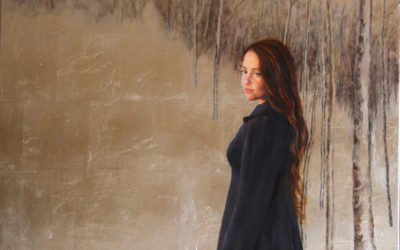
New Oil Paintings for my ‘Recollection’ Exhibition 2011

October 24th, 2011


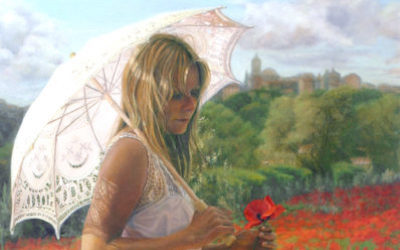
'Lost in Thought'
Oil Painting
© Susan Harrison-Tustain

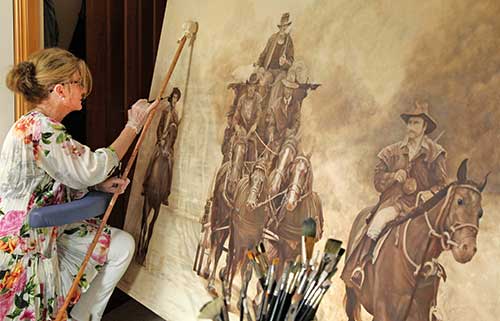
Less than a week to go before my Recollection exhibition opening! It is very exciting. My favorite moment is when the exhibition is declared open and each marshal standing next to each painting, removes the cloak and reveals the paintings for the first time. There is always a moment of silence, then "Ahhhhhh!" Four year's work unveiled at one time. It is a magical moment.

The opening function is a beautiful event. Ross Bachelder who titles himself "The Flute Guy" is flying from Maine USA especially to play at my exhibition. You will have heard me say previously that Sir Ray Avery will be officially opening the exhibition and Jon Mayson will be MC. It will be a beautiful evening. So many people travel huge distances to visit my exhibitions so I love create an experience that won't be forgotten.

I love to hear guests say that particular paintings from previous exhibitions still remain in their memories. It is then that I know my paintings have spoken to the viewer. It is an awesome feeling. Humbling.

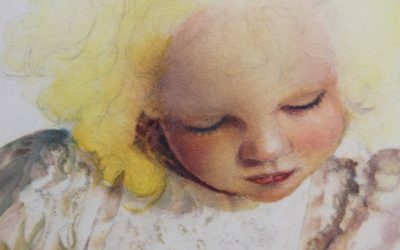
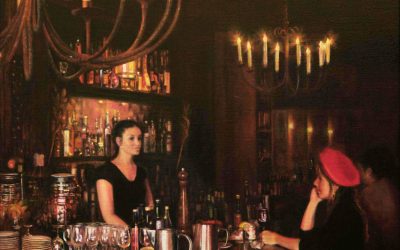
New Paintings are added to the exhibition gallery.


© Susan Harrison-Tustain

I hope you enjoy the new painting releases and the inspiration that compelled me to paint them.

I am still painting - trying to finish the last piece. It is a watercolor painting of two white doves sitting in a church alcove - with a stained glass window behind. I have titled it Lofty Refuge. When I have finished that piece I will post it here - but in the meantime - surprise!!!!!! here are some more new pieces you won't have seen yet. You can see a close up of these painting on my Exhibition 2011 page in the Fine Art section of this website.

For those coming to the exhibition - travel safely and I look forward to seeing you!

See you soon
Susan


Bellbird – Painting of a bird in a flax flower and a lesson about mixing greens in watercolor

September 28th, 2011

'Bellbird'
Watercolour on Arches Hot Pressed 300 gsm (140 lb) Watercolour Paper
485mm x 190mm
(19 in x 7 1/2 in)
© Susan Harrison-Tustain

A picnic stopover at Mavora Lakes, Southland, on a back road to Lake Wakatipu and Walter Peek. So pure and so clear the Bellbird call drew our attention to this slightly nectar inebriated songster dashing amongst the flax flowers.

See more new original paintings on my exhibition page.

Mixing Greens

You will see I have created a number of different greens in this watercolor painting. Flax bushes are often a blue green on the under side and as the leaves turn away from the light - they tend to be a more yellow green on the front.
How do I create these watercolor greens? We all know that when a surface faces the sky - it is influenced by the blue or grey of the sky color. So you can see that very clearly in this painting. I use much less yellow in my green mix to give this illusion. My green mix is Schmincke Sap Green and a touch of Thalo Blue. If I need to grey the blue/green color a little - I add a tiny touch of Scarlet Red.

You can see the area away from the light is a richer more vibrant green. I use my  underwash of Aureolin Yellow Modern in these areas. I let it dry and then add my Sap Green, a touch of Thalo Blue and Aureolin Yellow. If I need a pale color - I simply use more water. You can see how I push my greens from warm to cool, light to dark, rich to pale. Painting green leaves is a fantastic way to learn how you can create a three dimension by allowing a color to dominate.

For example: more blue will give the impression of the sky affecting the green. More yellow in your green mix will give the impression that part of the leaf is away from the effect of the sky. A warm green gives the effect of the leaf being affected by shadow. Learn how to paint green leaves by creating a similar type of leaf. You will find these lessons invaluable. Not only for mixing greens but it will teach you how to apply this color theory to any of your color mixes - no matter whether they are oil paintings, watercolor paintings, pastel studies or acrylic paintings. It is all about observation. Have a look at the video below to learn more about the perfect green!
Have fun!
Susan


In my Art Lessons section you will find more helpful tips and articles.

If you want to learn more about Watercolor Painting and Watercolor Technique check out my Watercolor DVDs.


Mountains oil painting – oil technique, oil dvd, new watercolor dvd

September 12th, 2011


"Pisa Range"
Oil on board
495mm x 295mm
19½" x 11½"
© Susan Harrison-Tustain

The first light fall of Autumn snow dusts the peaks of the Pisa mountain range. Snow clouds begin to envelope the pinnacles bringing with it, the excitement of the change of season.  We call this place “Central” (Central Otago, New Zealand) - austere, raw, beautiful, haunting, vast skies above rugged ranges. Captivating, compelling and beckoning.

The oil painting technique I used for this painting began with an underglaze of a grey/purple. Once dry, I then used the block-in oil painting method of creating the basic 'local' color of each area. I used these colors as the basic mix to establish the different areas in the painting: variations of greys with tints of purple for the clouds, dark grey/greens for the foreground, pale purple/greys for the light areas of the mountains and of course blue for the sky - all helped me establish the basic painting layers. I left my underpainting to show through in some areas - especially in the mid toned mountain peaks.

The next step is to observe the changing colors within each section, mix those colors and apply the detail - keeping it true to nature. Each area has a myriad of hues that describe this light snow fall, the forms - with sharp as well as rolling edges and shapes.  There are many painting lessons within each of these subjects. Too many to write here of course. For those of you who are artists and would love to learn how to paint skies, clouds, mountains, falling snow  - I hope to release an oil painting DVD in 2012 that will cover all these things and so much more.

I also plan to release a new watercolor DVD. This one will focus on mini studies of many subjects: capturing numerous subjects. If you are not currently on my mailing list - do join up.

My newsletters are infrequent but they are full of valuable information, painting breakthroughs and discoveries, news on exhibitions, new DVDs, workshops, European tours (next one will be in 2013), newspaper, magazine, TV and radio appearances etc etc.

Join Susan's mailing list

Your Email:  

Your Name:  

In my Art Lessons section you will find helpful articles.

If you want to learn more about Watercolor Painting and Watercolor Technique check out my Watercolor DVDs.

Happy Painting!
Susan

South Island Tomtit and Stewart Island Robin – Two original bird paintings in Watercolor

August 30th, 2011
'South Island Tomtit'
Watercolor on 300 gsm Arches
Hot Pressed paper
size: 16" x 10", 410 mm x 255 mm
© Susan Harrison-Tustain
'Stewart Island Robin'
Watercolor on 300 gsm Arches
Hot Pressed paper
size: 12" x 7 1/2", 300 mm x 190 mm
© Susan Harrison-Tustain

Stewart Island, New Zealand has a well deserved pristine, clean, green reputation. Stunningly beautiful this land feels almost prehistoric and it is not hard to imagine this is what most of New Zealand must have been like before man arrived. Almost predator-free this place has a mystical atmosphere. The bird song and wild-life as well as the native forest, Manuka scrub and wilderness is awe inspiring. An artist's mecca. It is here that I studied many of our native species including the South Island Tomtit and the Stewart Island Robin that will feature in my 2011 Recollection exhibition.

The South Island Tomtit flittered from branch to branch in a native forest area that was covered by a dense canopy of tree tops - shading the undergrowth from sunlight. A stream trickled beside the track and the almost luminous green moss covered everything in sight. Quite beautiful and almost surreal - this place was a heaven for bird-life.

Preview of the framed paintings:

We were also befriended by a gregarious Stewart Island Robin. He was our 'shadow' for about one kilometre of our tramping day. When we stopped - he stopped. He would sit nearby as I sketched - daring to draw closer and closer. My shoe lace was his ultimate target and as he tugged at it and then darted back into his perceived 'safe zone' - I was able to make quick sketches and notes for the study you see here.

My painting technique for feathers begins with underwashes of local color. I then use a dry- brush watercolor method. This is ideal for capturing the texture of feathers in watercolor. Layers of watercolor drybrush emulate the natural layering - and careful color selection and mixing help to create the feeling the viewer can reach into the painting and touch the feathers.

When painting bird studies I like to observe closely the pattern on the feathers, how they lay - one on top of the other as they protect and also repel rain. They way the texture of the feathers differs between the ruffled soft downy feathers in one area and the stronger more stiff feathers in another is always fun to observe and portray. I also note the amazing color patterns on each feather. The challenge is not to simply depict the bird - but it is to portray it's character within the paint layers. I hope you can feel something of the nature of each of these beautiful creatures.

Feel free to contact me via my contact form if you have any queries.

~~~~~

Learn about my Watercolor Painting Technique in my Watercolor DVDs.

Learn about how to paint in my Free Art Lessons.


‘Kaitiaki’ – a caretaker of the land – Mixed Media Painting

August 26th, 2011


"Kaitiaki"
Mixed Media on Flax Paper
350 mm x 440 m
13 1/4" x 17 1/4"
© Susan Harrison-Tustain

A chance meeting lead me to create this painting. I met Wallace Aramoana while I was visiting Ohiwa Harbour, near Ohope Beach, New Zealand. This is a man whose impact on his community, land and the youth of the area is legendary in that corner of NZ. My painting of Wallace was created on flax paper. I wanted it to capture his connection to the land. I wanted this to be a tribute to this man of the land and a man of his people. The New Zealander. Wallace believes this land is for everyone. Meeting this Maori elder was a life-changing experience for me. I wanted to title the painting "The Orator", but his reply was "No - that would be about me - I would like it to be about all of my people - 'Kaitiaki ' (translates to Caretakers of the land. )

How perfect that title is. It also relays the respect and admiration I have for this man. To paint him is an honor for me.

Click here to visit my painting exhibition page where you can find details on the exhibition including a sneak preview of some of my exhibition oil and watercolor paintings.

Feel free to contact me via my contact form if you have any queries.

~~~~~

Learn about my Watercolor Painting Technique in my Watercolor DVDs.

Learn about how to paint in my Free Art Lessons.


How to create a glowing red in watercolor or oil – Colour Lesson

August 18th, 2011

Part II of my Colour Lesson about creating a glowing red  is posted here.

I had so much fun creating this Red Parrot Tulip and while developing these glowing red washes, it occurred to me that I should share this information with you all. Red is a notoriously difficult color to portray – unless you know what I am about to tell you.

This is not a step by step guide of how to paint this subject. What I want to highlight are a number of points relating to painting a glorious glowing red using this study as an example.

For those who missed it - here is the link to Part I or go directly to this link for Part II

In these lessons you will find info about warm and cool colours, shadow color, color temperature, creating glowing reds, yellow underwash ...

This Parrot Tulip study will be an ongoing tutorial where I will teach you many of the invaluable lessons that will help you create form with red – no matter which medium you choose.

In my Art Lessons section you will find more helpful articles.

If you want to learn more about Watercolor Painting and Watercolor Technique check out my Watercolor DVDs.

Happy Painting

Susan


Watercolor Painting of an old door with keys – Mitchells Cottage in Fruitlands Central Otago, New Zealand

July 19th, 2011

Untitled
10  1/4" x 5  3/4"
260 mm x 145 mm
Watercolor on Arches 300gsm Hot Pressed paper
© Susan-Harrison-Tustain

New Watercolor Painting release

The aged door of a dry stone cottage built in 1904. Set high on a hill overlooking Fruitlands Central Otago, New Zealand - Mitchells Cottage stands as a poignant reminder of New Zealands early settlers.  Within these walls we feel their struggles and their challenges - but this home is also a testament to the resilience and incredible natural beauty of this area of New Zealand.

This is not just a watercolor painting of the time-worn door lock and latch -  and a tongue and groove wood door. This piece has a timeless character that epitomizes an era that was austere and very real. I wanted to capture the wholesome rawness of this place, but also a feeling of 'home fires burning'. My attention was drawn to this handle and the people who have used it, worn the patina on the old brass and lived their wholesome, hard lives with focus and enduring fortitude.

I was compelled to capture the emotion I felt when I stepped into this cottage. When I look at this watercolor painting I can feel there has been a presence of these stoical people and that, to me, is what my painting is all about. That is why I paint. My paintings are a tribute to the people or places that reach out and make their mark on my emotion and enduring thoughts and memories.

Feel free to contact me via my contact form if you have any queries.

~~~~~

Learn about my Watercolor Painting Technique in my Watercolor DVDs.

Learn about how to paint in my Free Art Lessons.


Information about Hot Pressed Watercolor Paper

July 15th, 2011

© Susan Harrison-Tustain - Watercolor Painting on 140 Lb hot pressed Arches Watercolor Paper

I have just been asked a question regarding the surface of Hot Pressed papers. I will post the answer here as I am sure this explanation may also be of interest to you all:

I find the best surface for my purposes is Arches 140lbs Hot Pressed paper.

Hot pressed paper does require stretching if you are using water on your painting. However a study painted in dry brush probably would not require stretching.

There is also 300lb hot pressed available. This may not need stretching as long as you are not using a great deal of water.

When painting in my usual style of watercolor realism, no matter which weight of paper I was using, I would still need to stretch it as I use a great deal of water when painting in my style.

I generally use 140lbs Arches Hot Pressed for a number of reasons:

It has the hardest gum size on the surface which means you have more time to manoeuvre your paint before it is absorbed into the paper.

I also means it can take a lot of battering without showing distress to the surface or fibres.

Arches Hot Pressed paper is generally quite smooth so it is also ideal for reproduction purposes.

It is interesting to note that Arches 90lb and Arches 300lbs Hot Pressed has much less size on the surface so the paint and water is absorbed much more quickly than it is when using 180lbs Hot Pressed.
90lbs Hot Pressed also buckles readily even if stretched.

I immerse my paper for 3 minutes. Then stretch it using water activated watercolor stretching tape.
I dry it flat.

The heavier the paper does not mean it is a better paper to paint on. It simply means different weight papers have different gum sized surfaces as explained above. But each paper manufacturer will use a different set of criteria.

Fabriano Artistico is a good paper but the size is very soft. It is easier to damage the surface and the paper absorbs water very quickly.

It is a good paper but for different painting methods than mine.

I do hope that helps.

You can also find information stretching paper here:
Susan's Free Art Lessons

Learn  about my Watercolor Painting Technique in my Watercolor DVDs.